Best Cardstock for Proxies
110 lb (200 gsm) or heavier. Anything lighter feels like a printout, not a card.
Regular printer paper (around 20 lb / 75 gsm) is roughly a third the thickness of a real Pokémon card — it's the single biggest reason home-printed proxies feel wrong before you even get to the artwork. 110 lb (200 gsm) is the minimum weight that feels substantial once laminated, and it's what most proxy printers standardize on.
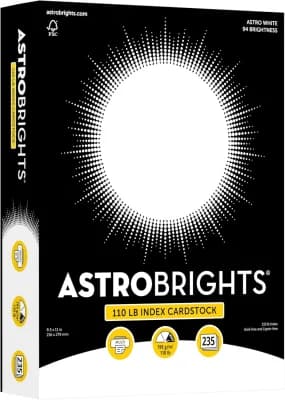
Astrobrights 110 lb White Cardstock
Top Pick235 sheets for around $10.49 — roughly $0.04 per sheet, and at 3×3 cards per page that's about 33 decks' worth of paper for the price of a single meta card. Heavy enough to feel right, cheap enough to reprint a deck if you tweak the list.
View on Amazon →Matte vs. Glossy
Matte cardstock (like the pick above) is the practical default — cheap, widely available, and holds up fine once laminated. If you want proxies that look closer to a real card's sheen, 200+ gsm glossy photo paper gets you there at a higher cost per sheet; it's a better fit for showcase proxies than for a stack you'll be reprinting every time you tweak a list.
Browse glossy photo paper on Amazon →Quick Checklist
110 lb / 200 gsm minimum weight — anything lighter feels flimsy even laminated.
White base (not cream/ivory) so colors print true to the card art.
Letter or A4 size to match your Proxidex print settings.
Laminate after cutting — see our lamination guide below — for the closest feel to a real card.
Free forever. No signup required to try.